Best Capterra Alternatives for Software & Service Discovery in 2026
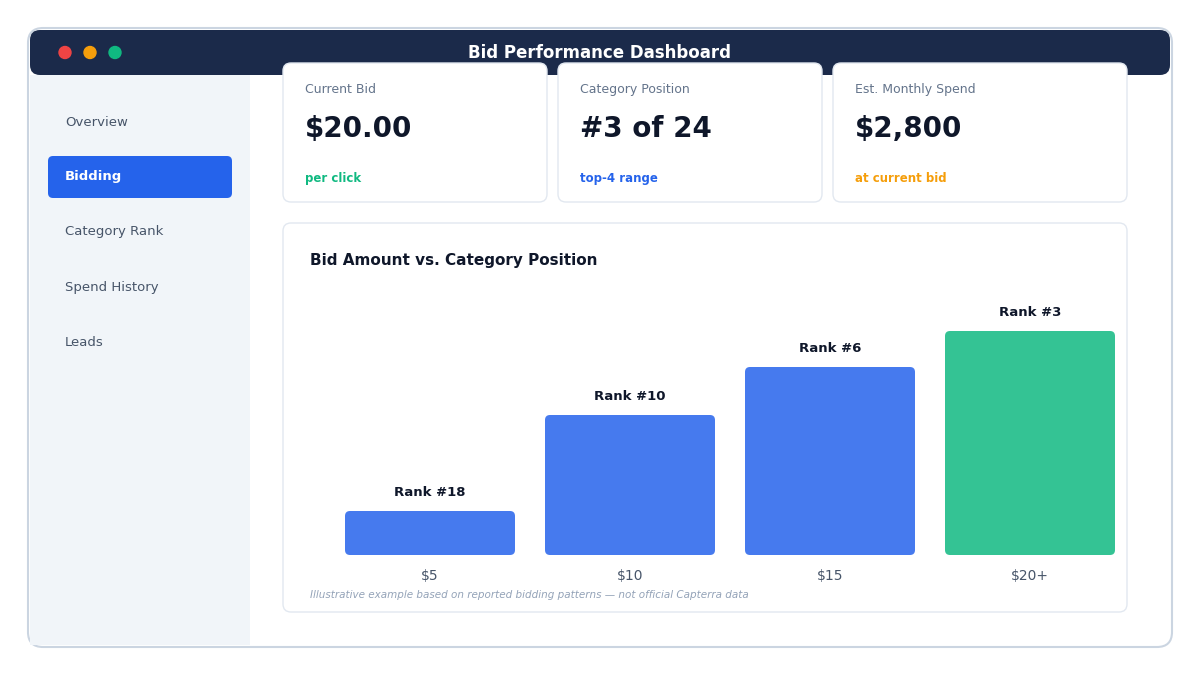
Vendors bidding $20 or more per click just to appear on page one of a category listing isn’t a hypothetical; it’s the going rate on Capterra’s pay-per-click ranking system in competitive software categories. That cost doesn’t disappear. It gets baked into subscription prices, service quotes, and the margins vendors quietly protect by cutting corners elsewhere. For buyers, this means the “top-ranked” result on a discovery platform often reflects ad spend more than product fit.
This matters more in 2026 than it did five years ago. Software and service buyers now rely on third-party discovery platforms earlier in their vendor research often before ever speaking to a sales rep. If the ranking logic behind that platform is pay-to-play, the buyer’s shortlist is compromised before evaluation even starts.
That’s the core reason Capterra alternatives have become a serious search category, not just for software buyers but for businesses sourcing IT agencies, dev shops, and service providers. Capterra, owned by Gartner Digital Markets alongside GetApp and Software Advice, built its business model around vendor advertising. Understanding how that model shapes what you see and what alternatives exist changes how you should approach vendor research this year.
Capterra draws more than 50 million visitors annually researching business software, making it one of the largest touchpoints in the B2B software buying journey and one of the largest surfaces for pay-per-click influence over rankings.
This blog breaks down why Capterra’s model creates friction for both buyers and vendors, what sites like capterra actually offer instead, and how to evaluate software discovery platforms including commission-free, no-bid alternatives without wasting weeks on biased shortlists.
Searching for capterra alternatives usually starts with a specific frustration: a shortlist that looked strong on paper fell apart during vendor calls, or a “top-rated” listing turned out to be a reseller rather than the actual service provider. That frustration is a signal, not a coincidence. It’s the direct result of a ranking system optimized for ad revenue rather than buyer outcomes, and it’s why more procurement leads are widening their research beyond a single directory before shortlisting anyone.
What Are Capterra Alternatives?
Capterra alternatives are software and service discovery platforms that let businesses research, compare, and select vendors without relying on Capterra’s pay-per-click ranking system. They range from peer-review sites like G2 to commission-free marketplaces that connect buyers directly with vetted providers based on fit rather than ad spend.
The distinction that matters isn’t just “which site has more reviews.” It’s how each platform decides what you see first and whether that decision is driven by vendor budget or buyer-relevant data.
The Core Problem With Directory-Style Discovery
Most buyers assume a top-ranked listing reflects quality. In reality, position on Capterra is largely a function of cost-per-click bidding, where vendors in competitive categories often pay $15–$25 per click just to maintain a top-four ranking. Drop below a $10–$15 bid in a crowded category, and visibility collapses to near zero regardless of review scores or product fit. It’s this exact blind spot that has more buyers exploring alternative ways to find development agencies that don’t ration visibility by ad budget.
This creates two compounding problems. First, smaller and newer vendors get priced out of visibility even when their product or service is a stronger match for a given buyer. Second, buyers researching vendors whether it’s project management software or an IT outsourcing partner are shown a ranking shaped by marketing budget, not by the 15–20 factors that actually predict a good fit (team size, domain expertise, pricing tier, past client outcomes, response time). Getting this part right takes a structured lens most bid-based platforms never surface, which is where a practical framework for comparing software development companies becomes more useful than any badge or ranking position.
The problem compounds further in the services and agency space. Unlike software SKUs with fixed feature sets, agency selection depends on scoping accuracy, portfolio relevance, and communication fit variables that a bid-based ranking system isn’t built to surface. A business searching for capterra for services meaning agencies, consultancies, or IT vendors rather than packaged software often finds the platform’s review-and-ranking format poorly suited to that kind of vetting. Teams underestimate this mismatch by a wide margin, frequently spending 3–4 weeks sourcing agencies through directory listings before realizing the shortlist was never properly vetted for scope, compared to teams that shortlist a vetted IT agency in as little as 72 hours once they move off directory-driven sourcing.
There’s also a timing problem specific to services procurement. Software buyers can often trial a product before committing, which softens the cost of a bad directory-driven pick. Agency and IT vendor buyers rarely get that luxury: a mis-scoped engagement can run 8–12 weeks before either side realizes the fit was wrong, at a cost of $20,000–$60,000 depending on project scale. Much of that risk traces back to scoping done too loosely at the outset exactly what a well-structured software development RFP is designed to prevent, and it’s exactly why Capterra competitors built around verified matching, rather than paid placement, have gained traction with procurement teams sourcing development partners, design agencies, and outsourced IT teams.
Vendors face a parallel version of the same problem. Agencies competing for visibility on bid-based directories often find themselves outbid by larger competitors with bigger marketing budgets, regardless of delivery quality or client satisfaction scores. A five-person boutique agency with a 4.9-star rating and a strong portfolio can still rank below a 50-person shop simply because the larger firm has more budget to spend on cost-per-click placement a dynamic at the center of the broader debate over agency marketplaces versus direct-matching models for hiring software teams. That dynamic pushes smaller, often higher-quality providers to look for sites like capterra that rank on verified fit data instead of ad spend.
How to Evaluate Software Discovery Platforms (Deep Dive)
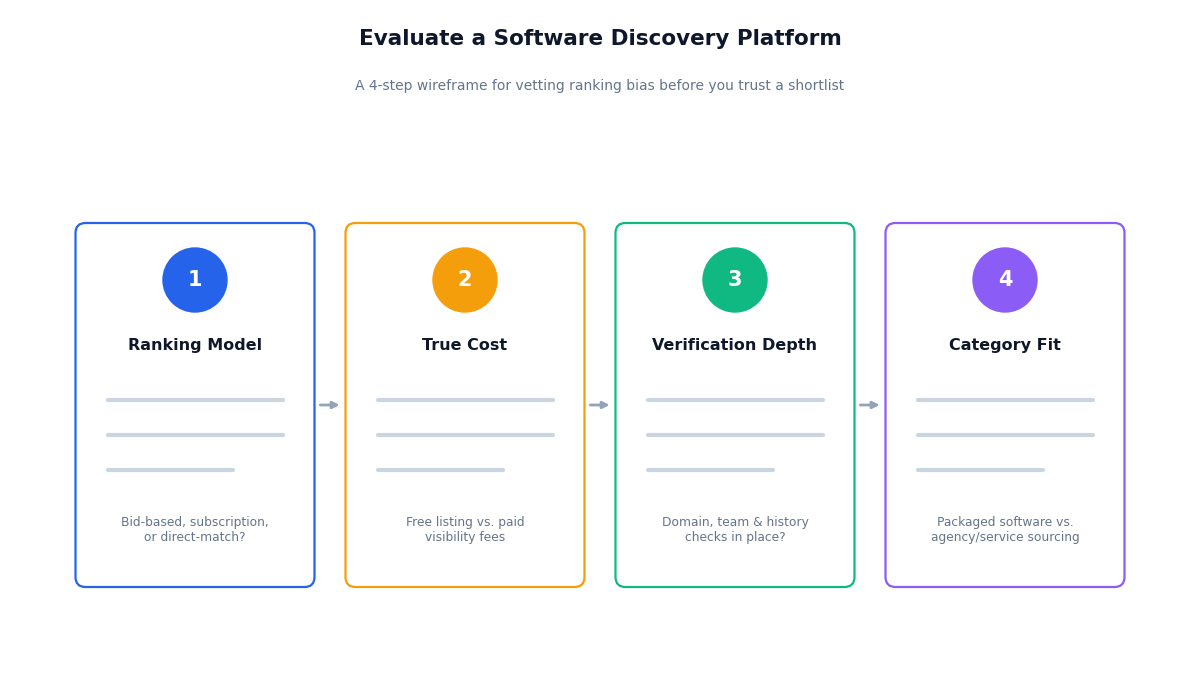
Choosing among capterra competitors requires more than comparing traffic numbers. The evaluation should center on four factors: ranking methodology, cost structure, verification depth, and category fit.
1. Understand the Ranking Model First
Before trusting any list of “top vendors” or “top agencies,” identify how that ranking is generated. There are three dominant models in 2026:
- Pay-per-click bidding (Capterra, Software Advice, GetApp) position is auctioned; higher bids buy higher visibility.
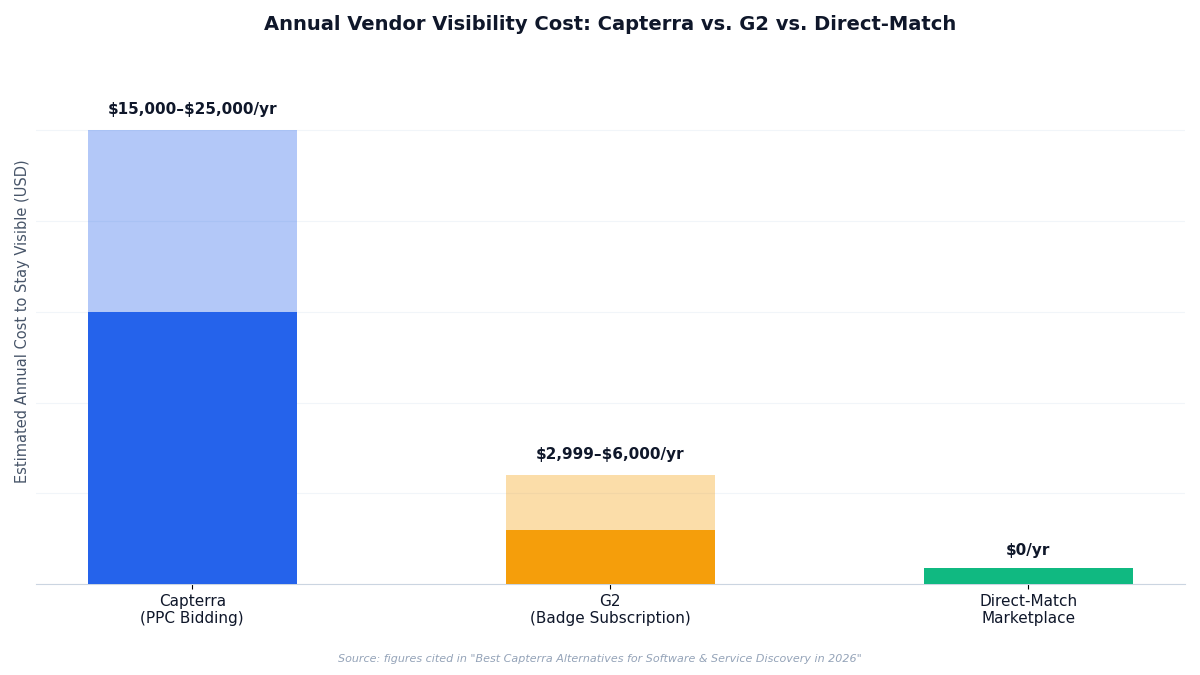
- Subscription-based badges (G2) vendors pay $2,999–$6,000+ per year for badge eligibility and profile features, with reviews layered on top.
- Direct-match, no-bid models matching is driven by data points like budget alignment, past performance, and verified credentials rather than advertising spend.
Each model produces a different kind of bias. Bid-based systems favor the vendors with the biggest ad budgets. Subscription-based badge systems favor vendors who can afford the annual fee, regardless of whether that fee reflects service quality. Direct-match models remove the financial lever from ranking entirely which is the structural difference worth weighing before you build a shortlist.
2. Calculate the True Cost of “Free” Listings
A listing that costs nothing to create can still cost thousands of dollars a month to be seen. Capterra’s base profile is free, but visibility, category badges, and lead delivery run through PPC or cost-per-lead programs often $30–$100+ per qualified lead depending on category competitiveness. G2’s paid tiers start around $2,999 annually and typically increase 50–100% at renewal. For a growing agency or software vendor, that’s $15,000–$25,000 a year in listing and advertising costs before a single deal closes costs that inevitably get passed to buyers through pricing, which is exactly why it pays to compare software development quotes line by line rather than taking a vendor’s rate card at face value.
Commission-free marketplaces flip this structure: no listing fee for either side, and no bidding war to win placement. That doesn’t guarantee better matches automatically, but it removes the single biggest source of ranking bias.
3. Weigh Verification Depth
Review authenticity matters, but review volume alone doesn’t verify vendor legitimacy. Look for platforms that check:
- Business website and email domain ownership
- Team size and structure claims against LinkedIn or public records
- Client history and reference-checkable outcomes
- Review sourcing methodology (organic vs. incentivized)
Platforms with layered agency verification website, domain, reviews, and team detail checks before a profile goes live reduce the odds of vetting a shell operation or a reseller posing as a direct provider.
How Does Capterra Ranking Work in Practice?
Understanding the mechanics helps explain why so many buyers eventually look for capterra alternatives in the first place. When a vendor enters a category, Capterra’s system auctions placement among competing bidders in real time. Bid $5 in a competitive category like project management software, and a vendor might see only 1–2 clicks in a month. Push that bid to $20 or above, and visibility jumps substantially often landing a vendor in the second-to-fourth position, which tends to capture more serious buyer attention than the very top slot, since most buyers compare 3–4 options before deciding, a habit worth building into a repeatable process with this practical guide to selecting the right IT company rather than trusting whichever listing bid highest that week.
This means the “best” software in a category and the “most visible” software in that same category are frequently two different products. Buyers who don’t know this treat position one through four as a quality signal, when it’s more accurately a budget signal layered on top of review data.
Comparing Capterra vs G2 for Vendor Visibility
The capterra vs g2 decision for vendors often comes down to which monetization model fits their budget cycle better. Capterra’s per-click model rewards vendors who can flex spend up and down with demand, while G2’s flat annual subscription rewards vendors who can commit a lump sum upfront for a full year of badge eligibility. Neither model ties cost to service quality, both tie cost to the vendor’s willingness to pay for exposure, which is the exact dynamic that has buyers and agencies searching for capterra competitors with a different cost structure entirely, a comparison worth running alongside this breakdown of G2 alternatives for agencies before committing budget to either platform.
4. Match the Platform to the Category
A platform built for comparing SaaS feature sets isn’t automatically the right tool for sourcing a custom software development partner. Software discovery platforms designed around fixed product categories (CRM, HR software, accounting tools) work well for packaged software. Service and agency sourcing benefits more from platforms built around project scoping, budget-matching, and direct connection because the buying decision hinges on fit and communication, not a feature checklist.
Case Studies: Vetting Vendors Without the Bidding War
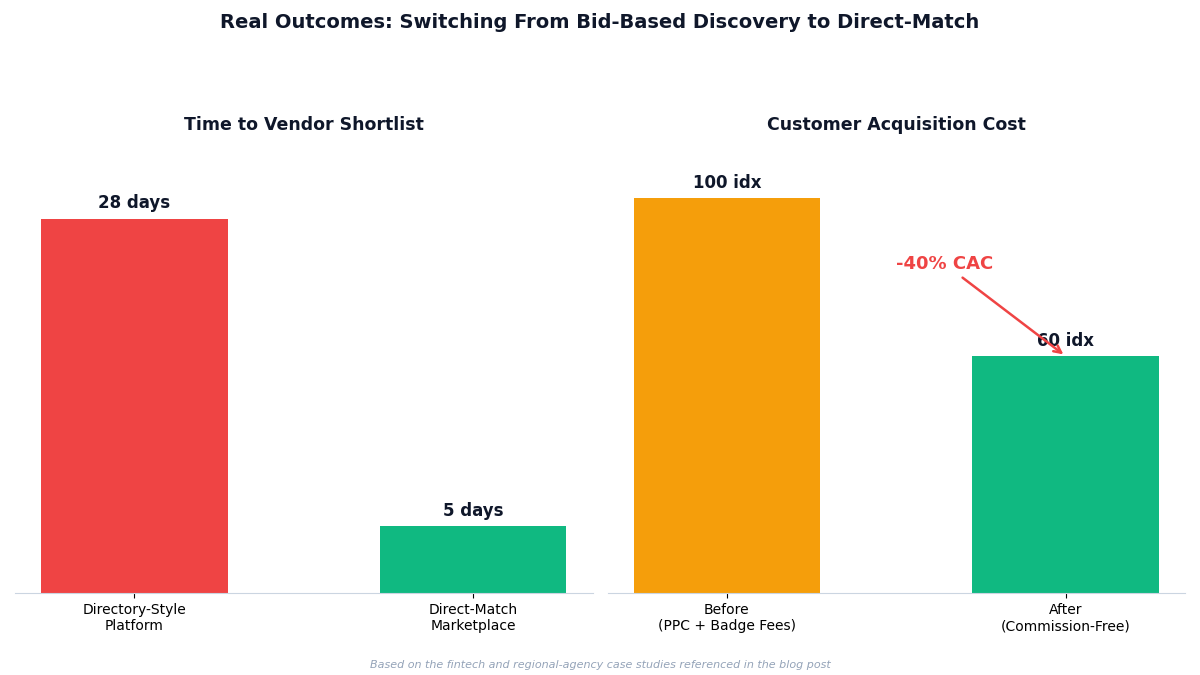
A mid-sized fintech startup needed a mobile development partner and initially sourced three agencies through a directory-style platform, selecting based on badge placement and review count. Two of the three turned out to be lead-gen resellers subcontracting the actual build overseas, discovered only after a 3-week scoping delay exactly the kind of pattern outlined in this list of red flags to watch for in a software development company before a contract is signed. Switching to a direct-match, verified marketplace cut vendor discovery time from roughly 4 weeks to under 5 days and connected the team with an agency whose portfolio matched their exact tech stack.
A regional agency competing for enterprise IT contracts had spent close to $18,000 annually on Capterra PPC bidding and G2 badge subscriptions combined, converting leads at a rate they described as inconsistent month to month. After shifting new-business sourcing to a commission-free, verified marketplace, the agency reported a 40% reduction in customer acquisition cost for inbound project leads within two quarters, primarily by eliminating recurring bid spend and per-lead fees a shift that mirrors the broader tradeoffs covered in IT outsourcing vs. hiring an agency when weighing sourcing models against long-term acquisition cost.
Capterra vs. G2 vs. Direct-Match Marketplaces: A Comparison
| Factor | Capterra | G2 | Direct-Match Marketplace |
| Vendor listing cost | Free base profile; PPC for visibility | Free base profile; $2,999+/yr for badges | Free for both sides |
| Ranking basis | Cost-per-click bidding | Subscription tier + review volume | Verified fit data (budget, expertise, history) |
| Best suited for | Packaged SaaS comparison | Enterprise software with heavy review culture | Agency/service sourcing, custom project scoping |
| Verification depth | Review moderation only | Review moderation only | Website, domain, team, and history checks |
| Buyer cost | Free | Free | Free |
This isn’t a case of one platform being universally “better.” Capterra vs G2 is really a choice between two ad-funded models with different audiences. The meaningful shift for service and agency buyers is toward platforms that remove bidding from the equation entirely.
What Most Teams Get Wrong
The most common mistake isn’t picking the wrong platform, it’s treating platform ranking as a proxy for due diligence. Teams see a badge or a top-three position and skip steps they’d never skip for a five-figure vendor decision: reference calls, portfolio verification, scope-fit conversations the same steps laid out in this step-by-step guide to hiring a software development company that a ranking position can’t substitute for.
A second, less obvious mistake: assuming free listings mean unbiased listings. Free-to-list doesn’t mean free-to-rank. If a platform monetizes placement anywhere in the funnel clicks, leads, or badge tiers that monetization shapes what buyers see first, even when the base listing costs nothing, a dynamic examined in more detail in this breakdown of alternatives to Clutch for businesses evaluating similar directory economics.
The teams that get vendor sourcing right treat directory rankings as a starting list, not a verdict. They cross-reference at least two discovery sources, request direct references outside the platform’s own review system, and weigh scoping conversations more heavily than badge placement particularly for services and custom development work, where fit matters more than feature parity, a distinction covered well in this comparison of freelancers vs. agencies vs. product studios for choosing the right development model.
There’s a third mistake worth naming directly: assuming every platform searching for capterra alternatives returns a fair comparison. Some “alternative” roundups are themselves monetized through affiliate placements, meaning the recommendation logic isn’t fundamentally different from the bidding model being criticized, it’s just less transparent about it. The safer approach is checking whether a platform discloses how it makes money and whether that revenue model touches ranking at all. If a platform can’t clearly answer that question, treat its recommendations with the same skepticism applied to a paid listing.
Where This Leaves Vendor Sourcing in 2026
If you’re evaluating capterra alternatives because bid-based rankings and badge subscriptions feel disconnected from actual vendor quality, the fix isn’t necessarily switching to another ad-funded directory, it’s finding a model that doesn’t monetize placement at all. GetProjects connects businesses directly with verified IT agencies using 50+ matching data points, with no commission and no bidding war on either side. If you’re sourcing a technology partner and want a shortlist based on fit rather than ad spend, posting a project takes under two minutes.
FAQ
Is Capterra free for software vendors?
Base listings are free, but meaningful visibility category rankings, badges, and lead delivery runs through paid programs. Vendors in competitive categories often pay $15–$25 per click or $30–$100+ per qualified lead, meaning a “free” listing can become a significant recurring cost once paid placement scales.
What is better than Capterra?
“Better” depends on what you’re sourcing. For packaged software comparisons, G2 offers a stronger review culture in enterprise categories. For sourcing agencies, IT vendors, or custom development partners, commission-free, direct-match marketplaces tend to outperform directory-style platforms because they verify fit criteria beyond review counts.
How does Capterra rank software listings?
Capterra’s category rankings are heavily influenced by cost-per-click bidding, alongside review scores and product data. Vendors bidding higher amounts generally secure top-four visibility in competitive categories, while lower bids or unpaid listings see minimal traffic regardless of review quality.
Is Capterra owned by Gartner?
Yes. Capterra operates under Gartner Digital Markets, alongside sibling platforms GetApp and Software Advice. All three generally share overlapping vendor data, review databases, and PPC advertising infrastructure.
What’s the difference between Capterra and G2?
Capterra primarily monetizes through cost-per-click bidding for category placement, while G2 uses an annual subscription model tied to badge eligibility, starting around $2,999 per year. Both layers review data on top of a paid visibility structure, but the mechanics of how vendors pay for rank differ.
Are there commission-free alternatives to Capterra for hiring service providers?
Yes. Some B2B marketplaces connect businesses directly with verified agencies without charging commission, bidding fees, or paid placement costs on either side, relying instead on data-matched criteria like budget, domain expertise, and verified client history.
Which capterra alternatives work best for small businesses?
Small businesses generally benefit most from platforms with no listing or bidding costs, since PPC-driven visibility on larger directories tends to favor vendors with bigger ad budgets. Direct-match, verification-first marketplaces reduce that disadvantage by ranking on fit data rather than spend.